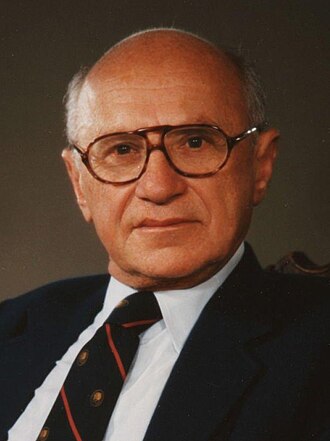
史鉴
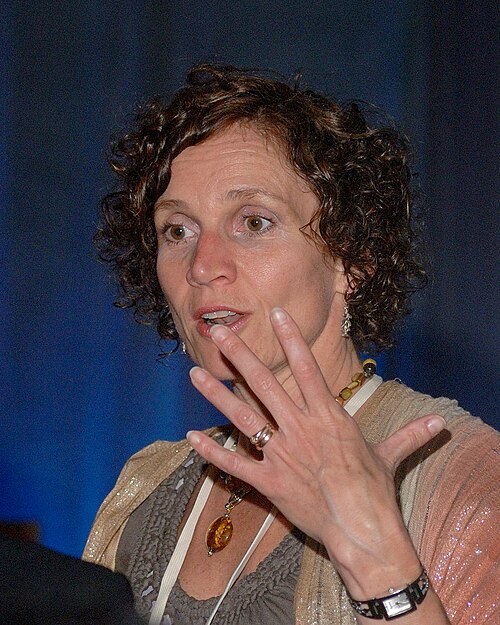
图:Dennis Hamilton from Seattle, Washington, USA · CC BY 2.0 · 维基共享资源
- 生卒
- 1939 年 11 月 7 日
- 出生地
- 洛杉矶
- 国籍 / 所属
- 美国
- 身份
- 工程师、计算机科学家、大学教师
- 子女
- Moses Daniel Liskov
- 代表作
- 分布式计算
- 就读
- 斯坦福大学、加州大学伯克利分校
- 任职机构
- 麻省理工学院
- 所属组织
- 计算机协会、美国国家科学院、美国文理科学院、美国国家工程院
- 领域
- 计算机科学
- 简述
- American computer scientist
芭芭拉·利斯科夫(英语:Barbara Liskov,1939年11月7日—),本名芭芭拉·简·休伯曼(英语:Barbara Jane Huberman)。美国计算机科学家,2008年图灵奖得主,2004年约翰·冯诺依曼奖得主。现任麻省理工学院电子电气与计算机科学系教授。
详细介绍
简历
1961年在加州大学伯克利分校获得数学学士学位。1968年在斯坦福大学获得博士学位,她是美国第一个计算机科学女博士。导师为1971年图灵奖得主约翰·麦卡锡教授,论文题目是国际象棋残局程序。
利斯科夫领导了许多重要的项目,包括小型低成本交互式的分时操作系统Venus,第一个支持数据抽象的面向对象编程语言CLU的设计与实现(1970年代),第一个支持分布式程序实现的高级语言Argus(1980年代),面向对象数据库系统Thor,还有最近的Byzantine分布式容错系统。其中,CLU语言对现代主流语言如C++/Java/Python/Ruby/C#都有比较深远的影响。而她从这些实际项目中提炼出来的数据抽象思想,已经成为软件工程中最重要的精髓之一。
她另外一个在程序设计中有广泛应用的成就,是与周以真(Jeannette Wing)合作发展出子类型定义,并且一起提出的Liskov代换原则,这是面向对象程序设计中最重要的几大原则之一。
认可和奖励
利斯科夫是美国工程院院士,美国艺术与科学院院士,美国计算机协会(ACM)会士。2002年,她被公认是在麻省理工学院顶级女性教师之一,在美国科学领域中的排名前50位大学教学人员之中。
正文摘自中文维基百科「芭芭拉·利斯科夫」(节选,删去了参考文献、表格和图片),按 CC BY-SA 4.0 使用;在维基百科读全文 ›
英文维基百科的更多内容
中文维基百科这一条比较短,下面是英文维基百科同一条目的节选,原文为英文,未翻译。
Barbara Jane Liskov (née Huberman; born November 7, 1939) is an American computer scientist who has made pioneering contributions to programming languages and distributed computing. Her notable work includes the introduction of abstract data types and the accompanying principle of data abstraction, along with the Liskov substitution principle, which applies these ideas to object-oriented programming, subtyping, and inheritance. Her work was recognized with the 2008 Turing Award, the highest distinction in computer science.
Liskov is one of the earliest women to have been granted a doctorate in computer science in the United States, and the second woman to receive the Turing Award. She is currently an Institute Professor and Ford Professor of Engineering at the Massachusetts Institute of Technology.
Early life and education
Liskov was born November 7, 1939, in Los Angeles, California, the eldest of Jane (née Dickhoff) and Moses Huberman's four children. She earned her bachelor's degree in mathematics with a minor in physics at the University of California, Berkeley in 1961. At Berkeley, she had only one other female classmate in her major. She applied to graduate mathematics programs at Berkeley and Princeton. At the time, Princeton was not accepting female students in mathematics. She was accepted at Berkeley but instead moved to Boston and began working at the MITRE Corporation, where she became interested in computers and programming. She worked at Mitre for one year before taking a programming job at Harvard, where she worked on language translation.
She then decided to go back to school and applied again to Berkeley, but also to Stanford and Harvard. In March 1968 she became one of the first women in the United States to be awarded a Ph.D.……
Career
After graduating from Stanford, Liskov returned to Mitre to work as a research staff.
Liskov has led many significant projects, including the Venus operating system, a small, low-cost time-sharing system; the design and implementation of CLU; Argus, the first high-level language to support the implementation of distributed programs and to demonstrate the technique of promise pipelining; and Thor, an object-oriented database system. With Jeannette Wing, she developed a particular definition of subtyping, commonly known as the Liskov substitution principle. She leads the Programming Methodology Group at MIT, with a current research focus in Byzantine fault tolerance and distributed computing. She was on the inaugural Engineering and Computer Science jury for the Infosys Prize in 2009. Liskov's design and development of CLU and Argus would later have influence on many well-known programming languages such as Java, C++, C#, and Ada.
Recognition and awards
Liskov is a member of the National Academy of Engineering, the National Academy of Sciences, and a fellow of the American Academy of Arts and Sciences and of the Association for Computing Machinery (ACM). In 2002, she was recognized as one of the top women faculty members at MIT, and among the top 50 faculty members in the sciences in the U.S. In 2002, Discover magazine recognized Liskov as one of the 50 most important women in science.
In 2004, Barbara Liskov won the John von Neumann Medal for "fundamental contributions to programming languages, programming methodology, and distributed systems". On 19 November, 2005, Barbara Liskov and Donald E. Knuth were awarded ETH Honorary Doctorates. Liskov and Knuth were also featured in the ETH Zurich Distinguished Colloquium Series. She was awarded a Doctorate Honoris Causa by the University of Lugano in 2011 and by Universidad Politécnica de Madrid in 2018.
Selected works
Liskov is the author of five books as of February 2023 and over one hundred technical papers.
Personal life
Liskov is Jewish. In 1970, she married Nathan Liskov. They have one son, Moses, who earned a Ph.D. in computer science from MIT in 2004 and teaches computer science at the College of William & Mary.
正文摘自英文维基百科(原文为英文,未翻译)「Barbara Liskov」(节选,删去了参考文献、表格和图片),按 CC BY-SA 4.0 使用;在维基百科读全文 ›
同时代、同地区的人物











同时代、同身份的人物(思想与学术)