史鉴

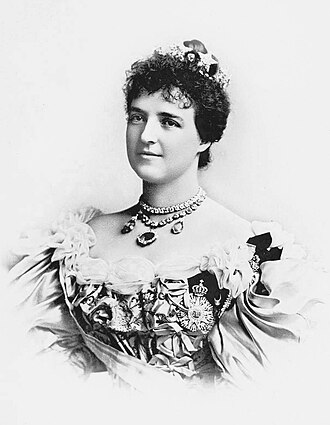
图:佚名 · Public domain · 维基共享资源
- 生卒
- 1863 年 9 月 28 日—1908 年 2 月 1 日
- 出生地
- 阿茹达宫
- 去世地
- 商业广场
- 国籍 / 所属
- 葡萄牙王国
- 身份
- 外交官、画家
- 职位
- Monarch of Portugal
- 父亲
- 路易斯一世
- 母亲
- 萨伏依的玛丽亚·皮娅公主
- 配偶
- 艾美莉 (奥尔良公主)
- 子女
- 曼努埃尔二世、萨克森-科堡与布拉干萨的玛莉亚·皮亚、路易斯·菲利佩、Infanta Maria Anna of Portugal
- 代表作
- Count of Alto Mearim、Count of Cuba、Marquis of Praia and Monforte
- 本名
- Carlos Fernando Luís Maria Victor Miguel Rafael Gabriel Gonzaga Xavier Francisco de Assis José Simão
- 原文名
- Carlos I o Martirizado
- 家族
- 奥尔良-布拉冈萨王室
- 宗教
- 天主教
- 死因
- 枪伤
- 简述
- King of Portugal from 1889 to 1908 (1863–1908)
卡洛斯一世(Carlos I o Martirizado,1863年9月28日—1908年2月1日),全名:卡洛斯·费尔南多·路易斯·马利亚·维克托·米格尔·拉斐尔·加布里埃尔·贡萨加·哈维尔·弗朗西斯科·德·阿希斯·若泽·西姆昂·德·布拉干萨(Carlos Fernando Luís Maria Victor Miguel Rafael Gabriel Gonzaga Xavier Francisco de Assis José Simão de Braganza),葡萄牙国王,绰号为外交官、烈士和海洋学家1889年至1908年在位。在2007年票选最伟大的葡萄牙人中,他排名第60,是排名一百位的名单里,当中的九位国王之一。
卡洛斯一世是葡萄牙国王路易斯一世与萨伏依的玛丽亚·皮娅公主之子,生于葡萄牙王国里斯本。他的母亲是意大利国王维托里奥·埃马努埃莱二世的女儿。
1886年,卡洛斯一世与奥尔良的阿美莉结婚。1895年,卡洛斯一世获英国维多利亚女王授予嘉德勋章。
卡洛斯一世的统治十分严厉。在他执政时期,葡萄牙在政治上与经济上都依附于英国。财政状况继续恶化:他在位时葡萄牙曾两次宣布破产。这些事实使他在国内很不得人心,并直接导致国内反对力量要求废除君主制。卡洛斯一世的应对手段是任命若昂·佛朗哥将军为军事独裁者,以镇压反对派的活动。
但是葡萄牙国内的动荡气氛并未平息。1908年2月1日,当卡洛斯一世与长子、葡萄牙王位第一顺位继承人布拉干萨公爵路易斯·菲利佩乘车通过里斯本大街时,遭到枪手伏击。卡洛斯一世及其长子路易斯·菲利佩均中弹身亡。
尽管葡萄牙王位第一顺位继承人路易斯·菲利佩比卡洛斯一世晚去世20分钟,但在这20分钟内,他在法理上也不是葡萄牙国王,因为葡萄牙王室没有自动继承王位的规定。实际继承王位的是卡洛斯一世的另一个儿子,曼努埃尔二世。
正文摘自中文维基百科「卡洛斯一世 (葡萄牙)」(删去了参考文献、表格和图片),按 CC BY-SA 4.0 使用
英文维基百科的更多内容
中文维基百科这一条比较短,下面是英文维基百科同一条目的节选,原文为英文,未翻译。
Dom Carlos I (Anglicized: Charles I, Carlos Fernando Luís Maria Víctor Miguel Rafael Gabriel Gonzaga Xavier Francisco de Assis José Simão; 28 September 1863 – 1 February 1908), known as "the Diplomat" (o Diplomata), "the Oceanographer" (o Oceanógrafo) among many other names, was King of Portugal from 1889 until his assassination in 1908. He was the first Portuguese king to die a violent death since King Sebastian in 1578, the only one to be assassinated, and penultimate Portuguese head of state to die a violent death.
Early life
Carlos was born in Lisbon, Portugal, the son of King Luís and Queen Maria Pia, daughter of King Victor Emmanuel II of Italy, and was a member of the House of Braganza. He had a brother, Infante Afonso, Duke of Porto. He was baptised with the names Carlos Fernando Luís Maria Víctor Miguel Rafael Gabriel Gonzaga Xavier Francisco de Assis José Simão.
He had an intense education and was prepared to rule as a constitutional monarch. In 1883, he traveled to Italy, the United Kingdom, France and Germany, where he increased his knowledge of the modern civilization of his time. In 1883, 1886 and 1888, he ruled as Regent as his father was traveling in Europe, as had become traditional among the Portuguese constitutional kings. His father Luis I advised him to be modest and to study with focus.
Reign
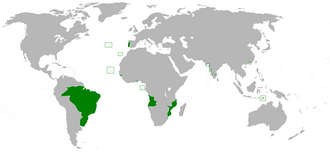
Carlos became king on 19 October 1889. After the 1890 British Ultimatum, a series of treaties were signed with the United Kingdom. One signed in August 1890 defined colonial borders in Africa along the Zambezi and Congo rivers, whereas another signed on 14 October 1899 confirmed colonial treaties dating back to the 17th century. These treaties stabilised the political balance in Africa, ending Portuguese claims of sovereignty on the Pink Map, a geographical conception of how Portuguese colonies would appear on a map if the territory between the coastal colonies of Angola and Mozambique could be connected with territory in central Africa. These central African territories became part of the British Empire with the Portuguese concession becoming a source of national resentment in the country.
Assassination
On 1 February 1908, the royal family was returning to Lisbon from the Ducal Palace of Vila Viçosa in Alentejo, where they had spent part of the hunting season during the winter. The royal party traveled by train to Barreiro, from there taking a steamer to cross the Tagus River and disembarking at Cais do Sodré in central Lisbon. On their way to the royal palace, the open carriage containing Carlos I and his family passed through the Terreiro do Paço fronting on the river. In spite of recent political unrest there was no military escort, except for a single mounted officer
riding by the carriage. While the carriage was crossing the square at dusk, shots were fired from amongst the sparse crowd by two republican activists, Alfredo Luís da Costa and Manuel Buíça.
Marriage and children
Carlos I was married to Princess Amélie of Orléans on 22 May 1886. She was the daughter of Philippe, Count of Paris, and Princess Marie Isabelle of Orléans. They had three children:
Luís Filipe, Prince Royal of Portugal (21 March 1887 – 1 February 1908)
Infanta Maria Ana of Braganza (b/d 14 December 1887)
Manuel II, King of Portugal between 1908 and 1910 (15 November 1889 – 2 July 1932)
Allegedly, Carlos I had several extramarital relationships, from which some bastards were born. He may have had a daughter from an American. By Grimaneza Viana de Lima, a Peruvian widow of a Brazilian diplomat, he possibly had a daughter called Maria Pia, born before 1902. Grimaneza was his last great passion.……
Honours
Portuguese
Grand Commander of the Three Military Orders of Christ, Aviz and St. James
- Grand Cross of the Tower and Sword
- Grand Cross of the Immaculate Conception of Vila Viçosa
- Foreign
正文摘自英文维基百科(原文为英文,未翻译)「Carlos I of Portugal」(节选,删去了参考文献、表格和图片),按 CC BY-SA 4.0 使用;在维基百科读全文 ›
亲属


所属政权
同时代、同地区的人物






同时代、同身份的人物(帝王与政治)