史鉴
- 生卒
- 1881 年 2 月 27 日—1966 年 12 月 2 日
- 出生地
- 上斯希
- 去世地
- 布拉里克姆、拉伦
- 国籍 / 所属
- 荷兰王国
- 身份
- 作家、数学家、大学教师、哲学家、拓扑学家
- 代表作
- Brouwer–Haemers graph、毛球定理、布劳威尔不动点定理、BHK释义、Brouwer–Hilbert controversy、Kleene–Brouwer order、Phragmen–Brouwer theorem
- 受影响于
- 伊曼努尔·康德
- 本名
- Luitzen Egbertus Jan Brouwer
- 原文名
- Luitzen Egbertus Jan Brouwer
- 就读
- 阿姆斯特丹大学
- 任职机构
- 阿姆斯特丹大学
- 所属组织
- 普鲁士科学院、哥廷根科学院、美国哲学会、利奥波第那科学院、东德科学院、英国皇家学会 等 7 项
- 领域
- 数学分析、集合论、拓扑学、测度、复分析、数理逻辑
- 死因
- 交通事故
- 简述
- Dutch mathematician and logician (1881–1966)
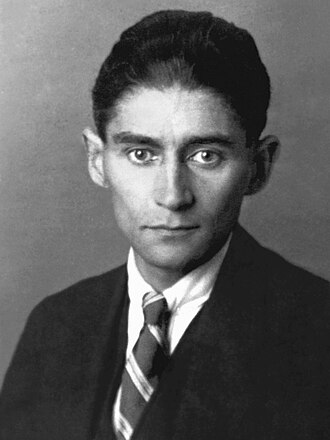
勒伊岑·埃赫贝特斯·扬·布劳威尔(荷兰语:Luitzen Egbertus Jan Brouwer,1881年2月27日—1966年12月2日),多写作L·E·J·布劳威尔(L. E. J. Brouwer),昵称贝尔特斯(Bertus),是一位荷兰数学家和哲学家。他是数学直觉主义流派的创始人,也在拓扑学、集合论、测度论和复分析领域有很多贡献。
详细介绍
生平
布劳威尔生于南荷兰省的Overschie(今鹿特丹郊区),16岁进入阿姆斯特丹大学学习物理学。1904年获得硕士学位。三年后他从Diederik Johannes Korteweg门下取得博士学位毕业。布劳威尔的早期兴趣主要在于拓扑学和数学基础上。他的工作包括以他名字命名的布劳威尔不动点定理,以及关于拓扑维数不变性的证明。
1912年布劳威尔获得阿姆斯特丹大学教授职位,并当选为荷兰皇家科学院院士。在此时期,他的研究兴趣主要在数学基础和哲学方面。布劳威尔不同意希尔伯特的形式化主义,对此,他提出的直觉主义可以看作是构造主义的一种变形,坚持数学对象必须可以构造,并不承认排中律。
布劳威尔的思想受到希尔伯特的强烈反对。由于希尔伯特的巨大影响力,20年代末,布劳威尔被排挤出德国《数学年刊》(Mathematische Annalen)的编委位置。这对他是个严重打击。
1951年布劳威尔从大学退休,并在世界各地讲学。1966年因车祸逝世。
2007年荷兰邮政发行了纪念布劳威尔的邮票。
正文摘自中文维基百科「勒伊岑·布劳威尔」(删去了参考文献、表格和图片),按 CC BY-SA 4.0 使用
英文维基百科的更多内容
中文维基百科这一条比较短,下面是英文维基百科同一条目的节选,原文为英文,未翻译。
Luitzen Egbertus Jan "Bertus" Brouwer (27 February 1881 – 2 December 1966) was a Dutch mathematician and philosopher who worked in topology, set theory, measure theory and complex analysis. Regarded as one of the greatest mathematicians of the 20th century, he is known as one of the founders of modern topology, particularly for establishing his fixed-point theorem and the topological invariance of dimension.
Brouwer also became a major figure in the philosophy of intuitionism, a constructivist school of mathematics which argues that mathematics is a cognitive construct rather than a type of objective truth. This position led to the Brouwer–Hilbert controversy, in which Brouwer sparred with his formalist colleague David Hilbert. Brouwer's ideas were subsequently taken up by his student Arend Heyting and Hilbert's former student Hermann Weyl. In addition to his mathematical work, Brouwer also published the short philosophical tract Life, Art, and Mysticism (1905).
Biography
Brouwer was born to Dutch Protestant parents. Early in his career, Brouwer proved a number of theorems in the emerging field of topology. The most important were his fixed point theorem, the topological invariance of degree, and the topological invariance of dimension. Among mathematicians generally, the best known is the first one, usually referred to now as the Brouwer fixed point theorem. It is a corollary to the second, concerning the topological invariance of degree, which is the best known among algebraic topologists. The third theorem is perhaps the hardest.
Brouwer also proved the simplicial approximation theorem in the foundations of algebraic topology, which justifies the reduction to combinatorial terms, after sufficient subdivision of simplicial complexes, of the treatment of general continuous mappings. In 1912, at age 31, he was elected a member of the Royal Netherlands Academy of Arts and Sciences. He was an Invited Speaker of the ICM in 1908 at Rome and in 1912 at Cambridge, UK. He was elected to the American Philosophical Society in 1943.
Brouwer founded intuitionism, a philosophy of mathematics that challenged the then-prevailing formalism of David Hilbert and his collaborators, who included Paul Bernays, Wilhelm Ackermann, and John von Neumann (cf. Kleene (1952), p. 46–59). A variety of constructive mathematics, intuitionism is a philosophy of the foundations of mathematics. It is sometimes (simplistically) characterized by saying that its adherents do not admit the law of excluded middle as a general axiom in mathematical reasoning, although it may be proven as a theorem in some special cases.
Brouwer was a member of the Significs Group. It formed part of the early history of semiotics—the study of symbols—around Victoria, Lady Welby in particular. The original meaning of his intuitionism probably cannot be completely disentangled from the intellectual milieu of that group.
In 1905, at the age of 24, Brouwer expressed his philosophy of life in a short tract Life, Art and Mysticism, which has been described by the mathematician Martin Davis as "drenched in romantic pessimism" (Davis (2002), p. 94). Arthur Schopenhauer had a formative influence on Brouwer, not least because he insisted that all concepts be fundamentally based on sense intuitions. Brouwer then "embarked on a self-righteous campaign to reconstruct mathematical practice from the ground up so as to satisfy his philosophical convictions"; indeed his thesis advisor refused to accept his Chapter II "as it stands, ... all interwoven with some kind of pessimism and mystical attitude to life which is not mathematics, nor has anything to do with the foundations of mathematics" (Davis, p. 94 quoting van Stigt, p. 41). Nevertheless, in 1908:
正文摘自英文维基百科(原文为英文,未翻译)「L. E. J. Brouwer」(节选,删去了参考文献、表格和图片),按 CC BY-SA 4.0 使用;在维基百科读全文 ›
所属政权

同时代、同地区的人物





同时代、同身份的人物(思想与学术)