史鉴

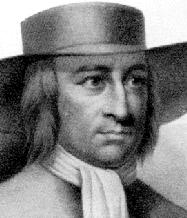
图:Pier Leone Ghezzi · Public domain · 维基共享资源
- 生卒
- 1649 年 7 月 22 日—1721 年 3 月 19 日
- 出生地
- 乌尔比诺
- 去世地
- 罗马
- 身份
- 天主教神父、天主教会主教
- 职位
- 教宗、枢机
- 参与
- 1700年教宗选举秘密会议、1691年教宗选举秘密会议
- 本名
- Giovanni Francesco Albani
- 原文名
- Clemens PP. XI
- 宗教
- 天主教会
- 就读
- 宗座额我略大学
- 领域
- administration and management of the church
- 简述
- 天主教会第243任教宗
克莱孟十一世(拉丁语:Clemens PP. XI;1649年7月23日—1721年3月19日)原名若望·方济各·阿尔巴尼(Giovanni Francesco Albani),1700年11月23日至1721年3月19日出任教宗。
详细介绍
大事
他在位其间发生中国礼仪之争。
译名列表
克勉十一世:香港天主教教区档案 历任教宗作克勉。
克雷芒十一世:《大英简明百科知识库》2005年版、《世界人名翻译大辞典》1993年版作克雷芒。
正文摘自中文维基百科「克勉十一世」(节选,删去了参考文献、表格和图片),按 CC BY-SA 4.0 使用;在维基百科读全文 ›
英文维基百科的更多内容
中文维基百科这一条比较短,下面是英文维基百科同一条目的节选,原文为英文,未翻译。
Pope Clement XI (Latin: Clemens XI; Italian: Clemente XI; Albanian: Klementi XI; 23 July 1649 – 19 March 1721), born Giovanni Francesco Albani, was head of the Catholic Church and leader of the Papal States from 23 November 1700 to his death in March 1721.
Clement XI was a patron of the arts and of science. He was also a great benefactor of the Vatican Library; his interest in archaeology is credited with saving much of Rome's antiquity. He authorized expeditions which succeeded in rediscovering various ancient Christian writings and authorized excavations of the Roman catacombs.
Biography
Early life
Giovanni Francesco Albani (Albanian: Gjon Françesk Albani) was born in 1649 in Urbino to the Albani family, a distinguished family of Albanian origin in central Italy. His mother Elena Mosca (1630–1698) was a high-standing Italian of Bergamasque origin, descended from the noble Mosca family of Pesaro. His father Carlo Albani (1623–1684) was a patrician. His mother descended in part from the Staccoli family, who were patricians of Urbino, in part from the Giordani, who were nobles of Pesaro. The original name of the Albani was Lazzi (Laçi) which they changed to Albani in memory of their origin. Francesco Albani funded an expedition in Albania to locate the exact settlement of his family's origins. In the final report, the two most probable locations which were presented to him were Laç near Lezhë and Laç near Kukës, both in northern Albania.
Cardinalate
Pope Alexander VIII elevated him to the cardinalate in 1690 despite his protests and made him the Cardinal-Deacon of Santa Maria in Aquiro but he later opted for the Diaconia of Sant'Adriano al Foro and later, as the Cardinal-Priest, for the titulus of San Silvestro in Capite.……
Pontificate
Election to the papacy
After the death of Pope Innocent XII in 1700, a conclave was convoked to elect a successor. Albani was regarded as a fine diplomat known for his skills as a peacemaker and so was unanimously elected pope on 23 November 1700. He agreed to the election after three days of consultation.
Unusually, from the viewpoint of current practice, his election came within three months after his ordination as a priest and within two months after he celebrated his first Mass, though he had been a cardinal for ten years previously. Having accepted election after some hesitation, he was ordained a bishop on 30 November 1700 and assumed the pontifical name of "Clement XI". Cardinal protodeacon Benedetto Pamphili crowned him on 8 December 1700 and he took possession of the Basilica of Saint John Lateran on 10 April 1701.
Death and burial
Clement XI died in Rome on 19 March 1721 at 12:45pm and was buried in the pavement of Saint Peter's Basilica rather than in an ornate tomb like those of his predecessors.
On 10 March, Clement XI had a meeting at about 11:00am with the Bishop of Sisteron Pierre François Lafitau. When the pope met with the bishop, he said that his time was drawing to a close and that he would soon die, despite protests to the contrary by Lafitau. On 14 March, Clement XI took ill while Lafitau was trying to get the pope's nephew to persuade the pope to name the French Chief minister Guillaume Dubois to the cardinalate. However, Clement XI was in a state of delirium and was not responsive to his pleas. On 16 March, Quadragesima Sunday, the pope did not participate in the services, however, celebrated Mass in his private chapel at the Quirinal Palace.……
Construction activity and patronage
Pope Clement XI was persuaded by Luigi Ferdinando Marsili in 1711 to provide funds for the establishment of the first public observatory in Italy, the Observatory of Bologna. Marsili gifted him with eight paintings made by Donato Creti depicting telescopes and astronomical observations, which remain in the Vatican Museums. He had a famous sundial added in the church of Santa Maria degli Angeli e dei Martiri and had an obelisk erected in the Piazza della Rotonda in front of the Pantheon, and a port built on the Tiber River, the beautiful Porto di Ripetta, demolished at the end of the 19th century.
He established a committee, overseen by his favourite artists, Carlo Maratta and Carlo Fontana, to commission statuary of the apostles to complete the decoration of Basilica of Saint John Lateran.……
正文摘自英文维基百科(原文为英文,未翻译)「Pope Clement XI」(节选,删去了参考文献、表格和图片),按 CC BY-SA 4.0 使用;在维基百科读全文 ›
同时代、同地区的人物