史鉴
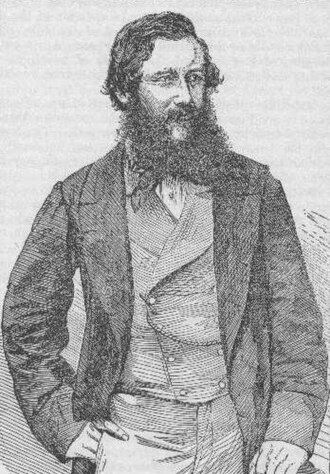
图:佚名 · Public domain · 维基共享资源
- 生卒
- 1827 年 5 月 3 日—1864 年 9 月 15 日
- 出生地
- 拜德福特
- 去世地
- 科斯汉姆
- 国籍 / 所属
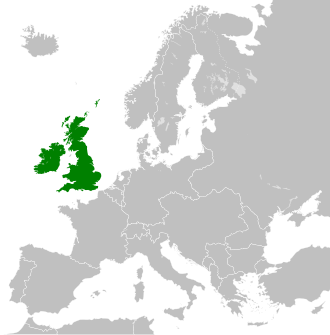
- 大不列颠及爱尔兰联合王国
- 身份
- 作家、军人、军官、botanical collector、植物学家、探险家、scientific collector
- 父亲
- William Speke
- 母亲
- Georgiana Elizabeth Hanning
- 原文名
- John Hanning Speke
- 简述
- British military officer and explorer (1827–1864)
约翰·汉宁·斯皮克(英语:John Hanning Speke,1827年5月4日—1864年9月15日),已故英属印度陆军军官及探险家,曾经3次于非洲探险,当中以搜索到尼罗河的源头最为闻名。
详细介绍
简历
于1858年,约翰·汉宁·斯皮克成为了首位看见非洲维多利亚湖的欧洲人。当年,约翰·汉宁·斯皮克正在和同伴理查德·弗朗西斯·伯顿为英国殖民地官署寻找尼罗河的源头,并且搜索战略资源。约翰·汉宁·斯皮克看见了如此宽广的水面即认定他寻找到尼罗河的源头,他以当时的英女王维多利亚命名了此湖。理查德·伯顿当时因为受到病困,而在更南方的坦噶尼喀湖湖畔休养,当接收到约翰·汉宁·斯皮克宣布此维多利亚湖为其个人发现时怒不可遏,两人公开决裂,引发的争吵不仅限于学术界,更引起了各位探险家的关注,因为他们希望证实或者否认约翰·汉宁·斯皮克的论断。
正文摘自中文维基百科「约翰·汉宁·斯皮克」(删去了参考文献、表格和图片),按 CC BY-SA 4.0 使用
英文维基百科的更多内容
中文维基百科这一条比较短,下面是英文维基百科同一条目的节选,原文为英文,未翻译。
John Hanning Speke (4 May 1827 – 15 September 1864) was an English explorer and army officer who made three exploratory expeditions to Africa. He is most associated with the search for the source of the Nile and, with Richard Burton, was the first European to reach Lake Victoria.
Life
Early life
Speke was born on 4 May 1827 at Orleigh Court, Buckland Brewer, near Bideford, North Devon. His father was William Speke and an uncle was John Lee Lee.
In the British Indian Army
In 1844 Speke was commissioned into the Bengal Army and posted to British India, where he served in the 46th Regiment of Bengal Native Infantry under Sir Hugh Gough during the Punjab campaign and under Sir Colin Campbell during the First Anglo-Sikh War. He was promoted lieutenant in 1850 and captain in 1852. He spent his leave exploring the Himalayan Mountains and Mount Everest and once crossed into Tibet.
Joining Burton's expedition
In 1854 he made his first voyage to Africa, first arriving in Aden to ask permission of the Political Resident of this British Outpost to cross the Gulf of Aden and collect specimens in Somalia for his family's natural history museum in Somerset.……
Return to London and third expedition
Speke and Grant now returned to England, where they arrived in June 1863 and were welcomed as genuine heroes. This did not last long in Speke's case however; disputes with Burton, who was relentless in his criticisms and a very compelling public speaker and gifted writer, left Speke's discoveries in less than an ideal light. Speke had also committed to write a book for John Blackwood which he found hard and time-consuming as he was not naturally a gifted writer. He failed to give a good and full report to the RGS for many months and thus in effect was not defending his positions of discovery.……
Death
A debate was planned between Speke and Burton before the geographical section of the British Association in Bath on 16 September 1864, but Speke had died the previous afternoon from a possibly self-inflicted gunshot wound while shooting at Neston Park in Wiltshire. A contemporary account of the events surrounding his death appeared in The Times:
At about 2.30 p.m. on the same day [15 September 1864] Speke set out from his uncle's house in company with his cousin, George Fuller, and a gamekeeper, Daniel Davis, for an afternoon's shooting in Neston Park. He fired both barrels in the course of the afternoon and about 4 p.m. Davis was marking birds for the two guns who were about 60 yards apart.……
Source of the Nile is settled, 1874–1877
In 1874–1877, Henry Stanley mounted a new expedition and took a boat along the entire shore of Lake Victoria; he established that Lake Tanganyika and the Nile were not connected in any way, and he explored the headwaters of Lake Edward. It was now proven that Speke had been right all along, and that the Nile flowed from Lake Victoria via Ripon Falls and Murchison Falls to Lake Albert and from there to Gondokoro.
According to other theories, the source of the White Nile, even after centuries of exploration, remains in dispute. The most remote source that is indisputably a source for the White Nile is the Kagera River, which was explored by German explorer Oscar Baumann, and geographically determined in 1937 by Burkhart Waldecker;……
Scientific works
Journal of the Discovery of the Source of the Nile. Blackwood and Sons. 1863.
Legacy
Eponyms
Two species of African reptiles are named in his honour: Speke's hinge-back tortoise, Kinixys spekii; and Speke's sand lizard, Heliobolus spekii. Three species of African mammals are named in his honour: the sitatunga, Tragelaphus spekii; Speke's gazelle, Gazella spekei; and Speke's pectinator, Pectinator spekei. Some streets and avenues in South Africa and Zimbabwe were named after him. The bar at the five-star Sonesta hotel in Nasr City, Cairo, was named after him when it opened in 1982; the then-manager came from the same town as Speke.
Film
The BBC miniseries The Search for the Nile (1971) tells the story of the Nile expeditions during the second half of the 19th century in a detailed way.
正文摘自英文维基百科(原文为英文,未翻译)「John Hanning Speke」(节选,删去了参考文献、表格和图片),按 CC BY-SA 4.0 使用;在维基百科读全文 ›
所属政权
同时代、同地区的人物




同时代、同身份的人物(军事)