史鉴

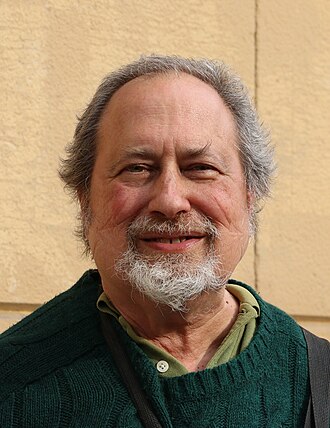
图:CERN · CC BY 4.0 · 维基共享资源
- 生卒
- 1925 年 11 月 24 日—2011 年 3 月 4 日
- 出生地
- 海牙
- 去世地
- 日内瓦
- 国籍 / 所属
- 荷兰王国
- 身份
- 物理学家、发明家
- 配偶
- Catharina M. Koopman
- 原文名
- Simon van der Meer
- 就读
- 代尔夫特理工大学、Christelijk Gymnasium Sorghvliet
- 任职机构
- 欧洲核子研究组织、飞利浦
- 所属组织
- 荷兰皇家学会、欧洲科学院、意大利猞猁之眼国家科学院、美国文理科学院
- 领域
- 物理学
- 死因
- 癌症
- 简述
- 物理学家, 荷兰王国
西蒙·范德梅尔(荷兰语:Simon van der Meer,1925年11月24日—2011年3月4日),荷兰物理学家,因发展出随机冷凝技术,而促使意大利物理学家卡洛·鲁比亚发现W及Z玻色子。
详细介绍
生平
范德梅尔1925年出生于荷兰海牙,在代尔夫特理工大学获得工程师学位。1956年加入欧洲粒子物理研究所。1984年他和粒子物理学家卡罗·鲁比亚因“其对一项大型计划中的决定性贡献,引领发现弱相互作用的传播者W及Z玻色子”(for their decisive contributions to the large project, which led to the discovery of the field particles W and Z, communicators of weak interaction)而一同获得诺贝尔物理学奖 。
2011年3月4日在瑞士日内瓦逝世。
正文摘自中文维基百科「西蒙·范德梅尔」(删去了参考文献、表格和图片),按 CC BY-SA 4.0 使用
英文维基百科的更多内容
中文维基百科这一条比较短,下面是英文维基百科同一条目的节选,原文为英文,未翻译。
Simon van der Meer (24 November 1925 – 4 March 2011) was a Dutch particle accelerator physicist who shared the Nobel Prize in Physics in 1984 with Carlo Rubbia for contributions to the CERN project which led to the discovery of the W and Z particles, the two fundamental communicators of the weak interaction.
Biography
One of four children, Simon van der Meer was born and grew up in The Hague, the Netherlands, in a family of teachers. He was educated at the city's gymnasium, graduating in 1943 during the German occupation of the Netherlands. He studied Technical Physics at the Delft University of Technology, and received an engineer's degree in 1952. After working for Philips Research in Eindhoven on high-voltage equipment for electron microscopy for a few years, he joined CERN in 1956 where he stayed until his retirement in 1990.
Van der Meer was a relative of Nobel Prize winner Tjalling Koopmans – they were first cousins once removed. In the mid-1960s, Van der Meer married Catharina M. Koopman; they had a daughter and a son.
Work at CERN
In the 1950s, Van der Meer designed magnets for the 28 GeV Proton Synchrotron (PS) In 1961, he invented a pulsed focusing device, known as the ‘Van der Meer horn’. Such devices are necessary for long-base-line neutrino facilities and are used even today.
That was followed in the 1960s by the design of a small storage ring for a physics experiment studying the anomalous magnetic moment of the muon. Soon after and in the following decade, Van der Meer did some very innovative work on the regulation and control of power supplies for the Intersecting Storage Rings (ISR) and, later, the SPS.
Van der Meer's ISR Collider days in the 1970s led to his technique for luminosity calibration of colliding beams, first used at the ISR and still used today at the LHC, as well as in other colliders.
The Nobel Prize committee recognised Van der Meer's idea of stochastic cooling and its application at CERN in the late 1970s and 1980s, specifically in the Antiproton Accumulator, which supplied antiprotons to the Proton-Antiproton Collider.
During his work at the ISR, Van der Meer developed a technique using steering magnets to vertically displace the two colliding beams with respect to each other; this permitted the evaluation of the effective beam height, leading to an evaluation of the beam luminosity at an intersection point. The famous ‘Van der Meer scans’ are indispensable even today in the LHC experiments; without these, the precision of the calibration of the luminosity at the intersection points in the Collider would be much lower.
For the new SPS machine constructed in the early seventies, he proposed that the generation of the reference voltages for the bending and quadrupole supplies should be based on measurements of the field along the cycle, and gave an outline of the correction algorithms. His proposal resulted in the first ever computer-controlled closed-loop system for a geographically distributed system, as the 7 km circumference SPS was; this was a no simple feat for the early 1970s.……
Nobel prize
Van der Meer invented the technique of stochastic cooling of particle beams. His technique was used to accumulate intense beams of antiprotons for head-on collision with counter-rotating proton beams at 540 GeV centre-of-mass energy or 270 GeV per beam in the Super Proton Synchrotron at CERN. Such collisions produced W and Z bosons which could be detected for the first time in 1983 by the UA1 experiment, led by Carlo Rubbia. The W and Z bosons had been theoretically predicted some years earlier, and their experimental discovery was considered a significant success for CERN. Van der Meer and Rubbia shared the 1984 Nobel Prize for their decisive contributions to the project.
Van der Meer and Ernest Lawrence are the only two accelerator physicists who have won the Nobel prize.
Apart from his Nobel Prize, Van der Meer also became a member of the Royal Netherlands Academy of Arts and Sciences in 1984.
正文摘自英文维基百科(原文为英文,未翻译)「Simon van der Meer」(节选,删去了参考文献、表格和图片),按 CC BY-SA 4.0 使用;在维基百科读全文 ›
所属政权

同时代、同地区的人物



同时代、同身份的人物(科学与发明)