 史鉴
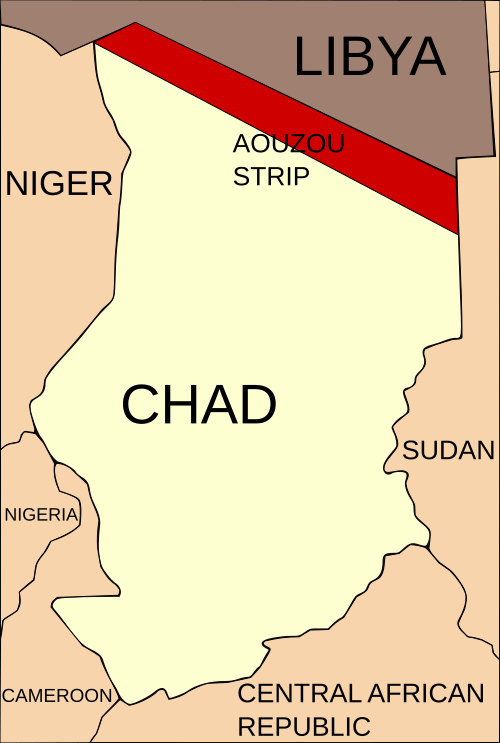
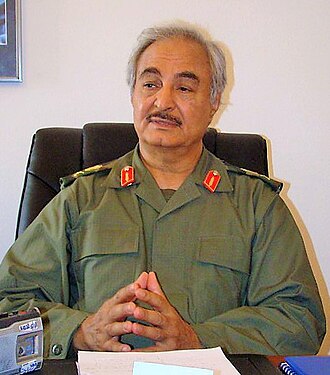
图:Mohammedbas · CC BY-SA 3.0 · 维基共享资源
- 时间
- 1978 年—1987 年
- 地点
- 乍得
- 国家 / 地区
- 乍得
- 参与方
- 法国、乍得、穆阿迈尔·卡扎菲、民族团结过渡政府、炸弹民族解放前线、扎伊尔、卡扎菲治下的利比亚
- 类型
- 战争
- 简述
- 1978–1987 series of military campaigns
乍得-利比亚冲突是1978年至1987年间利比亚在乍得进行的一系列军事行动,作战双方分别是利比亚和它的乍得武装组织盟友以及法国支持的乍得政府。利比亚在1969年利比亚绿色革命前就已开始干涉了乍得内政。 利比亚在1978年、1979 年、1980-1981 年和1983-1987年分别对乍得进行了四次武装干预。在这四次武装干预中,卡扎菲都得到了乍得内战中的多个派别的支持,而乍得政府则得到了法国政府的支持,法国政府在1978年、1983年和1986年也进行了军事干预。
1978年利比亚当局向乍得内战中的武装分子提供装甲、火炮和空中支援。 1986年战争接近尾声时,大多数乍得武装分子联合起来反对利比亚对乍得北部的占领。 美国、萨伊和法国向乍得反利比亚武装提供了反坦克和防空导弹。不久丰田战争爆发,利比亚军队被击溃并被驱逐出乍得,战争结束。
卡扎菲最初打算吞并乍得最北端的奥祖地带,他声称这是利比亚的一部分。 1972年,根据历史学家马里奥·阿泽维多的说法,卡扎菲的目标有所改变,他打算在当地建立一个从属国,并且该国要与利比亚保持密切联系,他要确保对奥祖地带的实际控制以及将法国人驱逐出该地区,而且还要以乍得为基地,扩大其在中非的影响力。
正文摘自中文维基百科「乍得—利比亚冲突」(删去了参考文献、表格和图片),按 CC BY-SA 4.0 使用
英文维基百科的更多内容
中文维基百科这一条比较短,下面是英文维基百科同一条目的节选,原文为英文,未翻译。
The Chadian–Libyan War was a series of military campaigns in Chad between 1978 and 1987, fought between Libya and its Chadian allies, and anti-Libyan Chadian groups supported by France, with the occasional involvement of other foreign countries and factions.
Libya had been involved in Chad's internal affairs prior to 1978 and before Muammar Gaddafi's rise to power in Libya in 1969, beginning with the extension of the Chadian Civil War to northern Chad in 1968. The conflict was marked by a series of four separate Libyan interventions in Chad, taking place in 1978, 1979, 1980–1981 and 1983–1987. On all of these occasions, Gaddafi had the support of a number of factions participating in the civil war, while Libya's opponents found the support of the French government, which intervened militarily to support the Chadian government in 1978, 1983 and 1986.
The pattern of the war delineated itself in 1978, with the Libyans providing armour, artillery and air support and their Chadian allies the infantry, which assumed the bulk of the scouting and fighting. This pattern was radically changed in 1986, towards the end of the war, when most Chadian forces united in opposing the Libyan occupation of northern Chad with a degree of unity never previously witnessed in Chad. This deprived the Libyan forces of their habitual infantry, exactly when they found themselves confronting a mobile army, well provided now by the United States, Zaire and France with anti-tank and anti-air missiles, thus cancelling out Libya's superiority in the air and in other respects. What followed was the Toyota War, in which the Libyan forces were routed and expelled from Chad, putting an end to the conflict.
Background
Occupation of the Aouzou Strip
Libyan involvement with Chad can be said to have started in 1968, during the Chadian Civil War, when the insurgent Muslim National Liberation Front of Chad (FROLINAT) extended its guerrilla war against the Christian President François Tombalbaye to the northerly Borkou-Ennedi-Tibesti Prefecture (BET). Libya's king Idris I felt compelled to support the FROLINAT because of long-standing strong links between the two sides of the Chad–Libya border. To preserve relations with Chad's former colonial master and current protector, France, Idris limited himself to granting the rebels sanctuary in Libyan territory and to providing only non-lethal supplies.
Conflict
Libyan escalation
The Malloum-Habré accord was perceived by Gaddafi as a serious threat to his influence in Chad, and he increased the level of Libyan involvement. For the first time with the active participation of Libyan ground units, Goukouni's FAP unleashed the Ibrahim Abatcha offensive on 29 January 1978 against the last outposts held by the government in northern Chad: Faya-Largeau, Fada and Ounianga Kébir. The attacks were successful, and Oueddei and the Libyans assumed control of the BET Prefecture.
The decisive confrontation between the Libyan-FAP forces and the Chadian regular forces took place at Faya-Largeau, the capital of the BET.……
Aftermath
While there were many violations of the ceasefire, the incidents were relatively minor. The two governments immediately started complex diplomatic manoeuvres to bring world opinion on their side in case, as was widely expected, the conflict was resumed. However, the two sides were also careful to leave the door open for a peaceful solution. The latter course was promoted by France and most African states, while the Reagan Administration saw a resumption of the conflict as the best chance to unseat Gaddafi.
Steadily, relations between the two countries improved, with Gaddafi giving signs that he wanted to normalize relations with the Chadian government, to the point of recognizing that the war had been an error.……
正文摘自英文维基百科(原文为英文,未翻译)「Chadian–Libyan War」(节选,删去了参考文献、表格和图片),按 CC BY-SA 4.0 使用;在维基百科读全文 ›
下属事件
- Operation Manta1983 年—1984 年 · 战役 · 非洲
- 丰田战争1986 年 12 月 16 日—1987 年 9 月 11 日 · 战争 · 非洲
- Battle of Fada1987 年 1 月 2 日 · 战役 · 非洲
相关人物
相关政权

同时期、同地区的大事
- 罗得西亚1965 年 11 月 11 日—1979 年 6 月 1 日 · 其他事件 · 非洲
- 比亚法拉1967 年 5 月 30 日—1970 年 1 月 15 日 · 其他事件 · 非洲
- 索马里内战1991 年 1 月 26 日 · 战争 · 非洲
- 尼日利亚内战1967 年 7 月 6 日—1970 年 1 月 15 日 · 战争 · 非洲
- 土耳其入侵塞浦路斯1974 年 7 月 20 日—1974 年 8 月 18 日 · 战役 · 非洲
- 安哥拉内战1975 年 11 月 11 日—2002 年 4 月 4 日 · 战争 · 非洲
- 埃以消耗战争1967 年 7 月 1 日—1970 年 8 月 7 日 · 战争 · 非洲
- 欧加登战争1977 年 7 月 23 日—1978 年 3 月 23 日 · 战争 · 非洲
- 德格1974 年 6 月 28 日—1987 年 2 月 22 日 · 其他事件 · 非洲
- 埃塞俄比亚内战1974 年 9 月 12 日—1991 年 6 月 4 日 · 战争 · 非洲
- 塞拉利昂内战1991 年 3 月 23 日—2002 年 1 月 18 日 · 战争 · 非洲
- 索维托起义1976 年 6 月 16 日 · 革命与起义 · 非洲
同时期的同类事件(战争)
- 越南战争1955 年 11 月 1 日—1975 年 4 月 30 日 · 战争 · 东南亚
- 朝鲜战争1950 年 6 月 25 日—1953 年 7 月 27 日 · 战争 · 东亚
- 波斯湾战争1990 年 8 月 2 日—1991 年 2 月 28 日 · 战争 · 西亚
- 伊拉克战争2003 年 3 月 20 日—2011 年 12 月 15 日 · 战争 · 西亚
- 第三次中东战争1967 年 6 月 5 日—1967 年 6 月 10 日 · 战争 · 西亚
- 阿富汗战争1979 年 12 月 25 日—1989 年 2 月 15 日 · 战争 · 南亚
- 两伊战争1980 年 9 月 22 日—1988 年 8 月 20 日 · 战争 · 西亚
- 第四次中东战争1973 年 10 月 6 日—1973 年 10 月 26 日 · 战争 · 西亚
- 古巴导弹危机1962 年 10 月 14 日—1962 年 10 月 28 日 · 战争 · 拉丁美洲
- 马岛战争1982 年 4 月 2 日—1982 年 6 月 14 日 · 战争 · 拉丁美洲
- 卢旺达大屠杀1994 年 4 月 7 日—1994 年 7 月 4 日 · 战争 · 非洲
- 阿富汗战争2001 年 10 月 7 日—2021 年 8 月 30 日 · 战争 · 南亚