史鉴
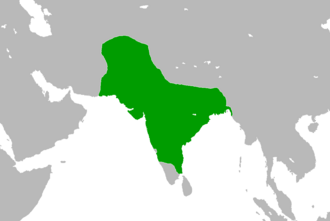
德干(gān)战争是自1680年希瓦吉去世至1707年奥朗则布去世期间,莫卧儿帝国与马拉塔帝国统治者希瓦吉的后裔之间发生的一系列军事冲突。1707年,奥朗则布去世。此时莫卧儿帝国军队已经完全控制了德干地区。
正文摘自中文维基百科「德干战争」(删去了参考文献、表格和图片),按 CC BY-SA 4.0 使用
英文维基百科的更多内容
中文维基百科这一条比较短,下面是英文维基百科同一条目的节选,原文为英文,未翻译。
The Deccan wars, also known as Mughal–Maratha wars, were a series of military conflicts between the Mughals and the Marathas after the death of Maratha Chhatrapati Shivaji in 1680 until the death of Mughal Emperor Aurangzeb in 1707. Shivaji was a central figure in what has been called "the Maratha insurgency" against the Mughal state. Both he and his son, Sambhaji (or Shambuji, typically), alternated between rebellion against the Mughal state and service to the Mughal sovereign in an official capacity. It was common practice in late 17th-century India for members of a ruling family of a small principality to both collaborate with and rebel against the Mughals.
Upon Shivaji's death in 1680, he was immediately succeeded by Rajaram, his second-born son by his second wife. The succession was contested by Sambhaji, Shivaji's first-born son by his first wife, and quickly settled to his benefit by the murders of Rajaram's mother and the loyal courtiers favouring Rajaram's succession, and by Rajaram's imprisonment for the following eight years. Although Sambhaji's rule was riven by factions, he conducted several military campaigns in southern India and Goa.
In 1681, Sambhaji was contacted by Muhammad Akbar, son of Mughal Emperor Aurangzeb, who was keen to partner with the Marathas in order to assert his political power against his ageing father's continuing dominance. The prospects of an alliance incited Aurangzeb to move his household, court and army to the Deccan. Akbar spent several years under the protection of Sambhaji but eventually went into exile to Persia in 1686. In 1689 Sambhaji was captured by the Mughals, and executed at the age of 31. His death was a significant event in Indian history, marking the end of the golden era of the Maratha kingdom.……
Marathas under Sambhaji (1681–1689)
Sambhaji was born in 1657 to Shivaji and his first wife, Saibai. He was trained in the art of warfare from a young age and was known for his bravery and military skills. After Shivaji's death in 1680, Sambhaji ascended to the throne of the Maratha Empire, which was resisting Mughal dominance. In the first half of 1681, several Mughal contingents were dispatched to besiege Maratha forts in present-day Gujarat, Maharashtra, Karnataka, and Madhya Pradesh.
Marathas under King Rajaram (1689–1700)
By end of 1689, Aurangzeb viewed the Marathas as all but dead, but this proved to be a near fatal blunder. The death of Sambhaji had rekindled the spirit of the Maratha forces, which made Aurangzeb's war aims impossible. Sambhaji's younger brother Rajaram was now given the title of chhatrapati (emperor). In March 1690, the Maratha commanders under the leadership of Santaji Ghorpade launched the single most daring attack on the Mughal army, sacking the tent where Aurangzeb himself slept.……
Maratha capital moved to Jinji
Maratha ministers realised that the Mughals would move on Vishalgad.……
Marathas under Tarabai
In March 1700, Rajaram died. His queen, Tarabai, who was daughter of the Maratha commander-in-chief Hambirrao Mohite, took charge of the Maratha army and continued fighting for the next seven years.
After the Battle of Satara, Aurangzeb contested for every inch of Deccan region at great cost of life and money. Aurangzeb drove west, deep into Maratha territory, notably conquering Satara (the Maratha capital), while the Marathas expanded eastwards into Mughal lands (Hyderabad State).……
Aftermath of the war
By 1731, the Peshwa was being paid tributes from the territories of Malwa and Gujarat, although Maratha Generals had seized control of those areas even earlier.
The Mughal empire was split into regional kingdoms, with the Nizam of Hyderabad, Nawab of Oudh, and Nawab of Bengal quick to assert the nominal independence of their lands.……
正文摘自英文维基百科(原文为英文,未翻译)「Deccan wars」(节选,删去了参考文献、表格和图片),按 CC BY-SA 4.0 使用;在维基百科读全文 ›
下属事件
- Siege of Bijapur1685 年 4 月 15 日—1686 年 9 月 12 日 · 战役 · 南亚
- Siege of Jinji1690 年 9 月—1698 年 1 月 8 日 · 战役 · 南亚