 史鉴
- 时间
- 1921 年 2 月 21 日
- 地点
- 德黑兰
- 国家 / 地区
- 卡扎尔家族
- 结果 / 影响
- 礼萨汗、艾哈迈德沙·卡扎尔、佩斯扬上校、霍拉姆沙赫尔、波斯哥萨克骑兵旅、西姆柯·席卡克 等 9 项
- 类型
- 政变
- 简述
- Coup d'état in Persia, 1921
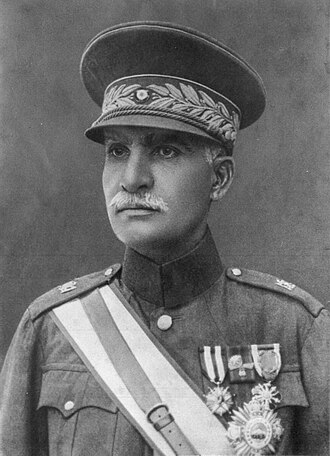
1921年波斯政变(英语:1921 Persian coup d'état)波斯称为1299年埃斯凡德月政变(波斯语:کودتای ۳ اسفند ۱۲۹۹,取自太阳回历),是1921年2月22日(太阳回历1299年埃斯凡德月3日)由波斯哥萨克旅领袖礼萨·沙阿·巴列维在卡扎尔波斯崇高国发起的一场政治事变。在这场政变中,领袖礼萨·沙阿·巴列维领导的哥萨克旅推翻了卡扎尔王朝的统治,礼萨·沙阿·巴列维被拥戴为波斯沙阿,伊朗帝国成立,巴列维王朝世袭统治开始。
正文摘自中文维基百科「1921年波斯政变」(删去了参考文献、表格和图片),按 CC BY-SA 4.0 使用
英文维基百科的更多内容
中文维基百科这一条比较短,下面是英文维基百科同一条目的节选,原文为英文,未翻译。
1921 Iranian coup d'état, known in Iran as 3 Esfand 1299 coup d'état (Persian: کودتای ۳ اسفند ۱۲۹۹ with the Solar Persian date), refers to several major events in Qajar Iran in 1921, which eventually led to the deposition of the Qajar dynasty and the establishment of the Pahlavi dynasty as the ruling house of Iran in 1925.
The events began with a coup by the Persian Cossack Brigade headed by Reza Khan on 22 February 1921. The precise level of British involvement in the coup remains a matter of historical debate, but it is almost certain that Edmund Ironside provided advice to the plotters. With this coup Zia ol Din Tabatabaee took over power and became prime minister. The coup was largely bloodless and faced little resistance. With his expanded forces and the Cossack Brigade, Reza Khan launched successful military actions to eliminate separatist and dissident movements in Tabriz, Mashhad and the Jangalis in Gilan. The campaign against Simko and the Kurds was less successful and lasted well into 1922, though it eventually concluded with Iranian success.
Background
In late 1920, the Persian Socialist Soviet Republic in Rasht was preparing to march on Tehran with "a guerrilla force of 1,500 Jangalis, Kurds, Armenians and Azerbaijanis", reinforced by the Bolsheviks' Red Army. This fact, along with various other disorders, mutinies and unrest in the country created "an acute political crisis in the capital."
By 1921, Qajar Persia had become corrupt and inefficient. The oil-rich nation was somewhat reliant on Britain and Russia for military and economic support. Civil wars earlier in the decade had threatened the government, and the only regular military force at the time was the Cossack Brigade.
Ahmad Shah Qajar, the shah of Iran at the time, had only been crowned in 1909 at the age of eleven and was considered to be a weak, incompetent ruler, especially after British, Russian, and Ottoman occupations of Persia during World War I.……
The coup and subsequent events
Reza Khan seizes Tehran
On 18 February 1921, the Cossacks reached Tehran meeting little resistance. In the early morning of 21 February, they entered the city. Only several policemen, taken by surprise, are said to have been killed or wounded in the center of Tehran. Backed by his troops, Reza Khan forced the Cabinet to dissolve and oversaw his own appointment as minister of war. Reza Khan also ensured that Ahmad, still ruling as shah, appoint Zia ol Din Tabatabaee as prime minister.
Treaty with the RSFSR
On 26 February, the new government signed a treaty of friendship with the Russian Soviet Federative Socialist Republic, formerly the Russian Empire. As a result of the treaty, the RSFSR gave up some of its former Russian facilities in Iran, although Soviet diplomats ensured that their nation was allowed to intervene with its military in Iran, as long as the intervention was "self-defense". The RSFSR also gave up any Russian-owned railroads and ports in Iran.
Change of prime ministers
Prior to the coup, Ahmad Qavam, governor of Khorasan, had asserted his loyalty to the Qajar dynasty.……
Aftermath
In the aftermath of the 1921 events, relations of the Persian government with the Emirate of Muhammara had also become strained. In 1924, the Sheikh Khazal rebellion broke out in Khuzestan, being the first modern Arab nationalist uprising led by the Sheikh of Mohammerah Khaz'al al-Ka'bi. The rebellion was quickly and effectively suppressed with minimal casualties.
Rezā Khan was placed on the throne by the constitutional assembly in 1925, and many of those involved in the coup were either killed or put in prison. One general, Sepahbod Amir Ahmadi, tried to stand up against the establishment of the new dynasty, but on a visit to his now imprisoned brother-in-law, General Heydargholi Pessian, who had been one of the leaders of the coup that defeated the Qajar dynasty, Amir Ahmadi confessed that his efforts to prevent Reza Khan being made Shah and the monarchy reinstated were being thwarted by the British.
正文摘自英文维基百科(原文为英文,未翻译)「1921 Persian coup d'état」(节选,删去了参考文献、表格和图片),按 CC BY-SA 4.0 使用;在维基百科读全文 ›
相关人物
相关政权
同时期、同地区的大事
- 亚美尼亚种族大屠杀1915 年 4 月 24 日—1923 年 · 屠杀与暗杀 · 西亚
- 英属巴勒斯坦托管地1920 年 7 月 1 日—1948 年 5 月 14 日 · 其他事件 · 西亚
- 加里波利之战1915 年 4 月 25 日—1916 年 1 月 9 日 · 战役 · 西亚
- 土耳其独立战争1919 年 5 月 19 日—1923 年 7 月 24 日 · 战争 · 西亚
- 第二次意大利埃塞俄比亚战争1935 年 10 月 3 日—1937 年 2 月 19 日 · 战争 · 西亚
- 阿拉伯起义1916 年 6 月—1918 年 10 月 · 革命与起义 · 西亚
- 希土战争 (1919年-1922年)1919 年 5 月 15 日—1922 年 10 月 11 日 · 战争 · 西亚
- 亚述人种族大屠杀1915 年 1 月—1919 年 · 屠杀与暗杀 · 西亚
- 青年土耳其党革命1908 年 7 月 24 日 · 革命与起义 · 西亚
- 高加索战役1914 年 10 月 24 日—1918 年 10 月 30 日 · 战役 · 西亚
- 土耳其-亚美尼亚战争1920 年 9 月 23 日—1920 年 12 月 2 日 · 战争 · 西亚
- 萨勒卡默什保卫战1914 年 12 月 22 日—1915 年 1 月 17 日 · 战役 · 西亚
同时期的同类事件(革命与起义)
- 1917年俄国革命1917 年 · 革命与起义 · 中亚与北亚
- 十月革命1917 年 10 月 25 日—1917 年 10 月 26 日 · 革命与起义 · 欧洲
- 俄国二月革命1917 年 3 月 8 日—1917 年 3 月 16 日 · 革命与起义 · 欧洲
- 义和团运动1899 年 8 月—1901 年 9 月 · 革命与起义 · 东亚
- 1905年俄国革命1905 年 1 月 22 日—1907 年 6 月 16 日 · 革命与起义 · 中亚与北亚
- 辛亥革命1911 年 10 月 10 日—1912 年 2 月 12 日 · 革命与起义 · 东亚
- 复活节起义1916 年 4 月 24 日—1916 年 4 月 29 日 · 革命与起义 · 欧洲
- 德国十一月革命1918 年 10 月 24 日 · 革命与起义 · 欧洲
- 喀琅施塔得叛乱1921 年 3 月 1 日—1921 年 3 月 18 日 · 革命与起义 · 欧洲
- 向罗马进军1922 年 10 月 27 日—1922 年 10 月 30 日 · 革命与起义 · 欧洲
- 巴斯马奇运动1916 年—1934 年 · 革命与起义 · 中亚与北亚
- 五四运动1919 年 5 月 4 日 · 革命与起义 · 东亚